It would be hard to grow up in America without having some childhood memory involving marbles.
Growing up along the St. Clair River in Algonac, Michigan, it seemed like every kid had a little bag, an old Maxwell House coffee can, or—in my case—a mason jar filled with them. Cat's-eyes, swirls, solids, shooters—little pieces of glass that somehow became part of childhood.
That's the essence of American Material Memory. Ordinary things survive long after we've stopped using them, quietly holding onto people, places, and stories we haven't thought about in years.
I still have these marbles sitting on a shelf in my studio. In 2022, after looking at them for years, I finally decided I had to draw them.
From the Artist
As I drew these marbles, I couldn't shake the memory of something that happened in Mr. Ferman's fifth-grade class.
One of the guys—I think it was Ted—accidentally knocked over his can of marbles.
Hundreds of them scattered across the classroom floor.
Every kid in the room watched in absolute horror because Mr. Ferman had one rule that nobody escaped:
“If a marble falls on the floor, it's Mr. Ferman's!”
Ted had just lost ALL of his marbles.
We helped gather every last one, and the can ended up sitting on the corner of Mr. Ferman's desk.
Ted never said anything about it afterward, but I think Mr. Ferman eventually gave them all back. Ted just never brought them to school again.
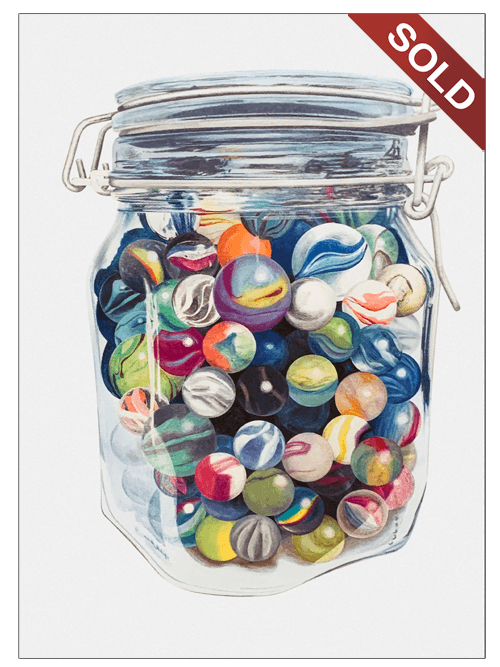 Image 1 of 5
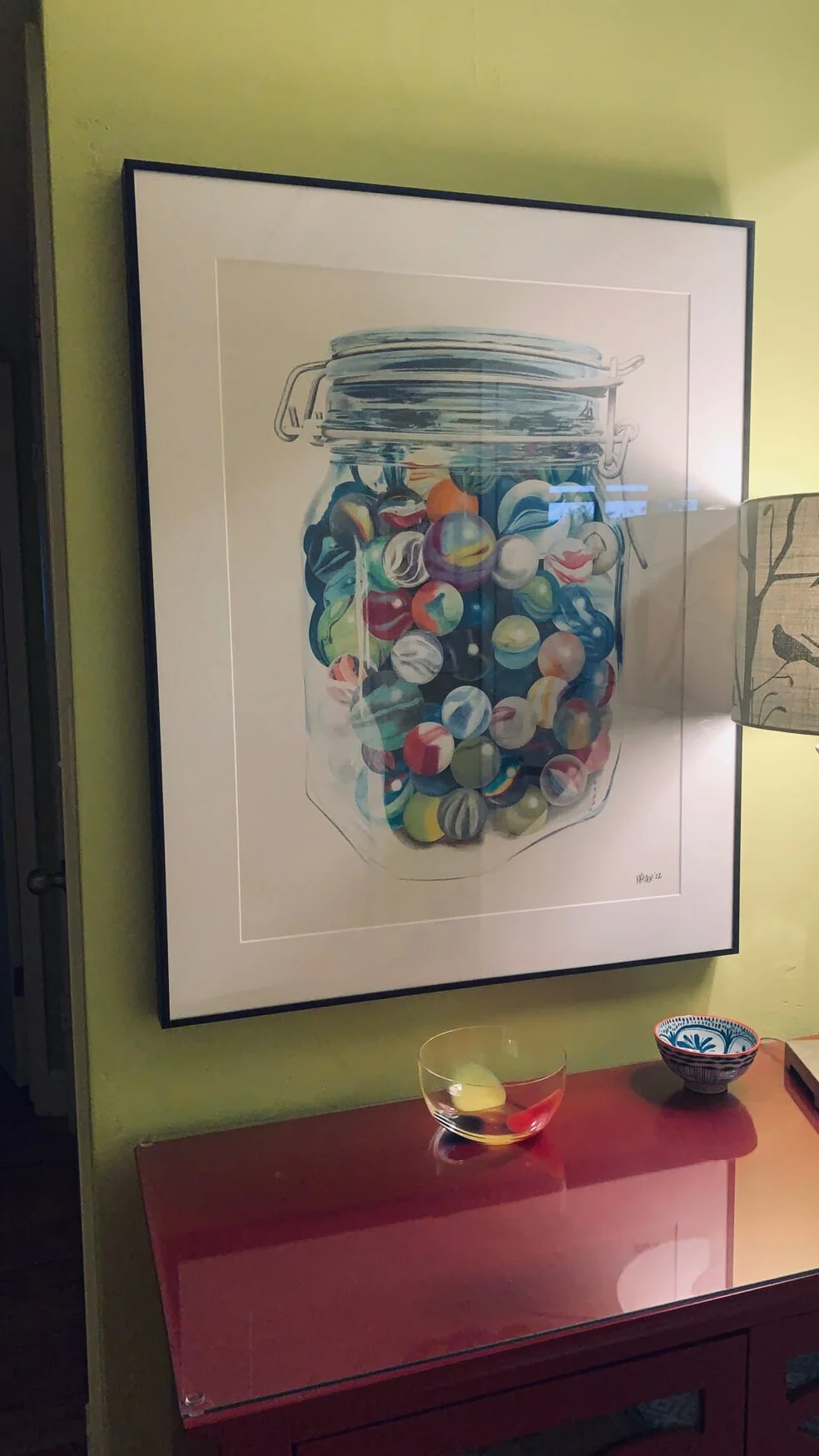 Image 2 of 5
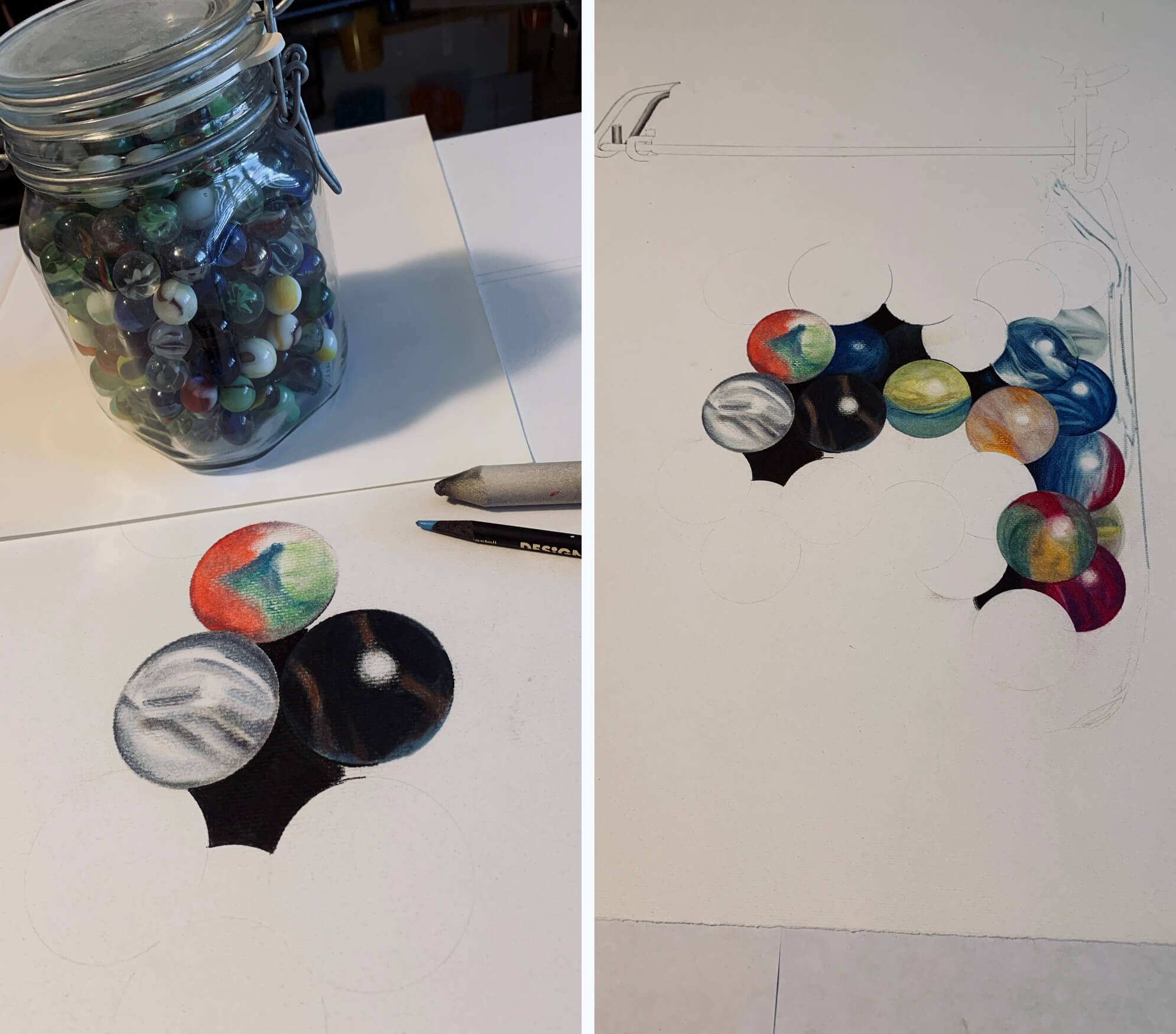 Image 3 of 5
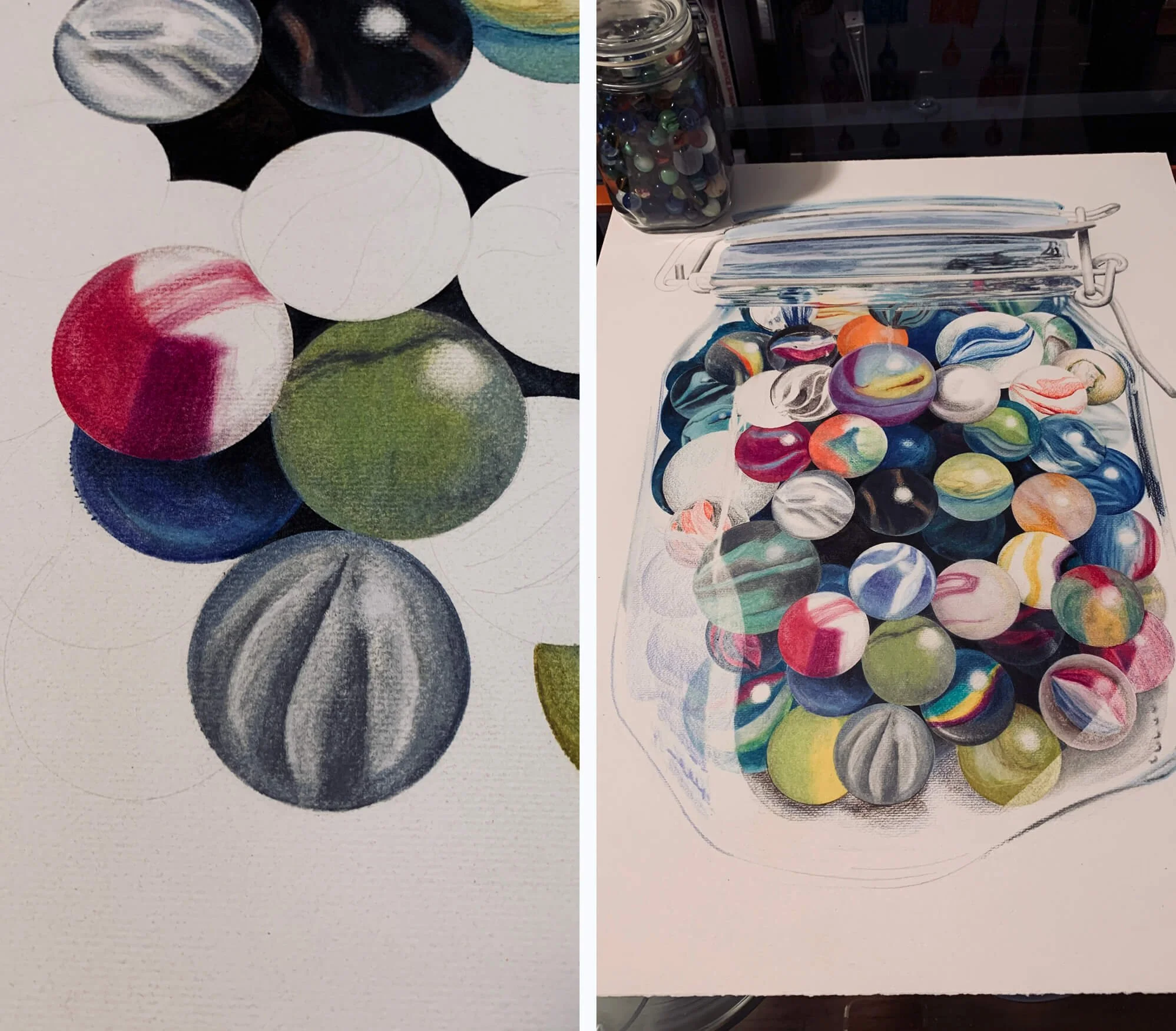 Image 4 of 5
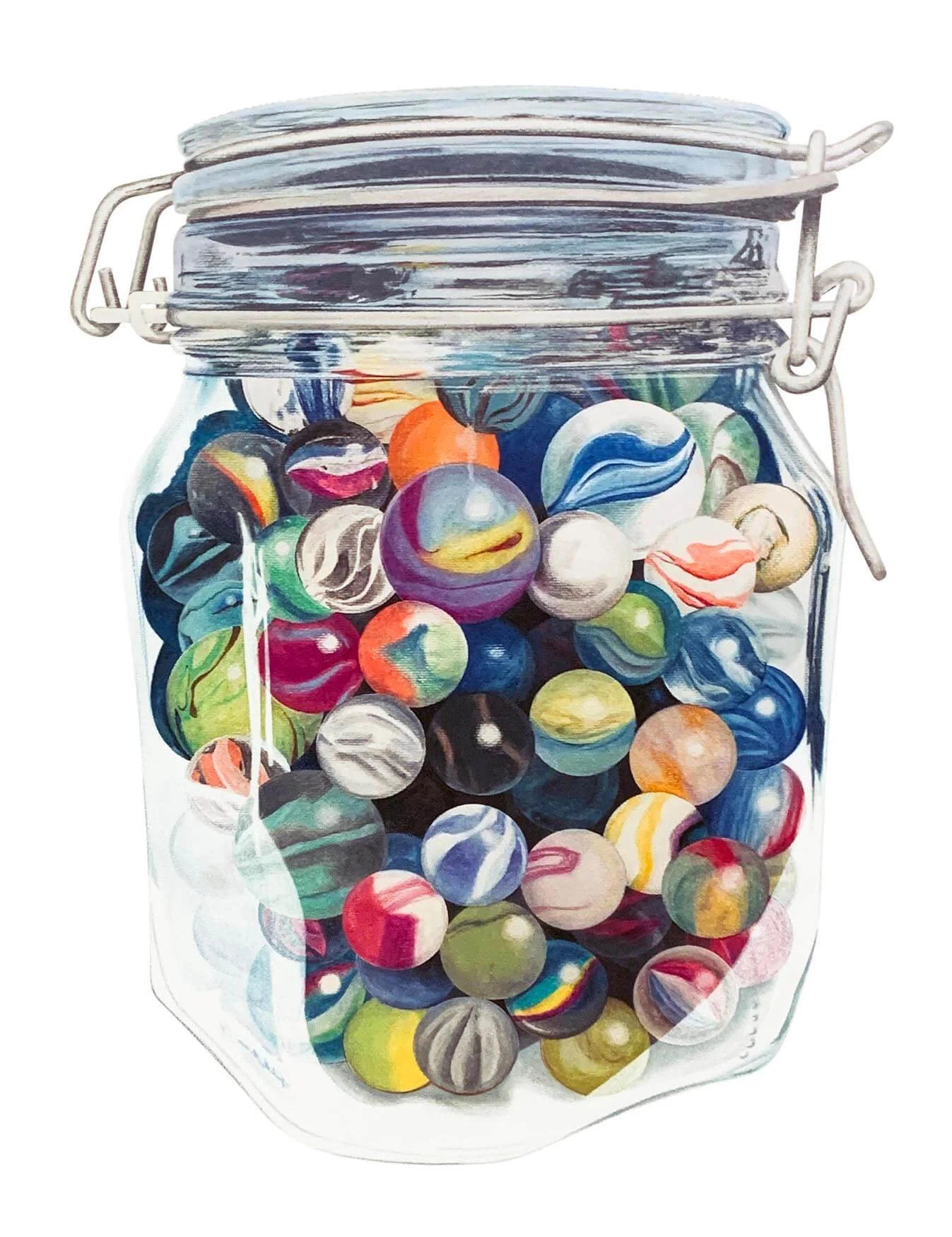 Image 5 of 5