Before roller skating became a polished recreational industry, a pair of skates could simply mean freedom.
They turned sidewalks, driveways, basements, and neighborhood streets into places to practice, race, fall, get back up, and try again.
American Material Memory often lives in the physical experience of childhood—the scraped knee, the uneven pavement, the sound of wheels, and the satisfaction of finally getting it right.
The roller skate is therefore more than a piece of sporting equipment. It represents a time when children learned through movement, repetition, and play.
From the Artist:
The problem with having steel roller skates back in the day was that where I grew up in Algonac, Michigan, we didn't have paved sidewalks. We had roads coated with tar, then covered with pea gravel.
If we wanted to roller skate, we'd have to do it in Grandma & Grandpa Carter's basement.
You could only go in small circles. But it filled the afternoon with fun.
Sometimes, we’d make it over to the high school and skate on the tennis courts or around the school parking lot. Still, lots of fun until you hit one of the gravel pebbles. It was like the stones were just waiting for you to skate by so they could trip you up.
As I look at my skate drawing, I really don’t think about skating. I think about falling. Ripping the knees in my pants. Scraping the palms of my hands.
I remember thinking that skating was the most dangerous thing a kid could do.
Before roller skating became a polished recreational industry, a pair of skates could simply mean freedom.
They turned sidewalks, driveways, basements, and neighborhood streets into places to practice, race, fall, get back up, and try again.
American Material Memory often lives in the physical experience of childhood—the scraped knee, the uneven pavement, the sound of wheels, and the satisfaction of finally getting it right.
The roller skate is therefore more than a piece of sporting equipment. It represents a time when children learned through movement, repetition, and play.
From the Artist:
The problem with having steel roller skates back in the day was that where I grew up in Algonac, Michigan, we didn't have paved sidewalks. We had roads coated with tar, then covered with pea gravel.
If we wanted to roller skate, we'd have to do it in Grandma & Grandpa Carter's basement.
You could only go in small circles. But it filled the afternoon with fun.
Sometimes, we’d make it over to the high school and skate on the tennis courts or around the school parking lot. Still, lots of fun until you hit one of the gravel pebbles. It was like the stones were just waiting for you to skate by so they could trip you up.
As I look at my skate drawing, I really don’t think about skating. I think about falling. Ripping the knees in my pants. Scraping the palms of my hands.
I remember thinking that skating was the most dangerous thing a kid could do.
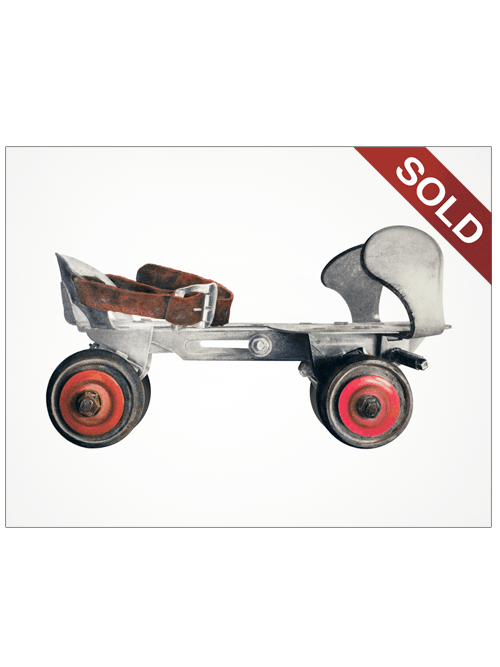 Image 1 of 5
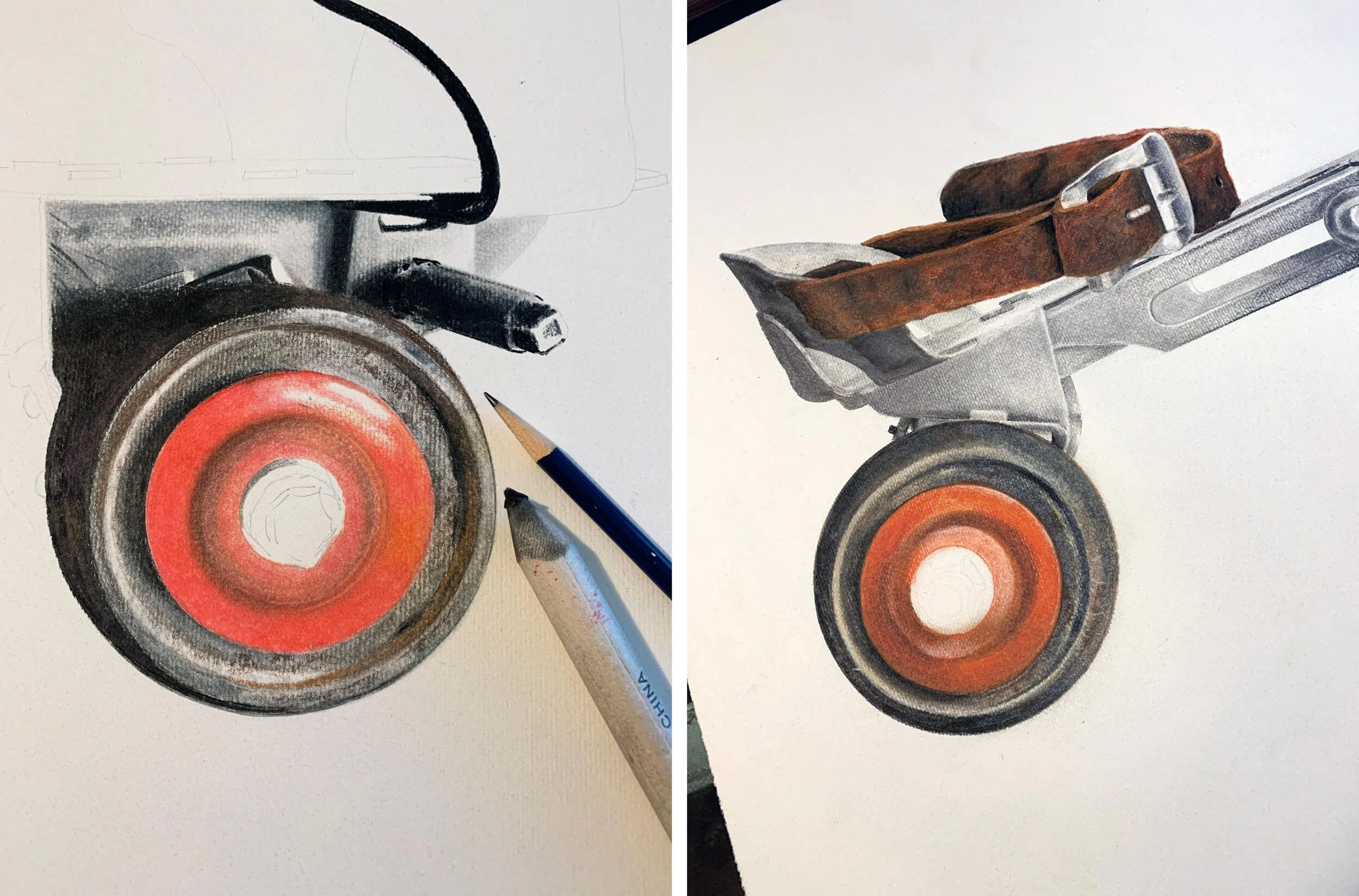 Image 2 of 5
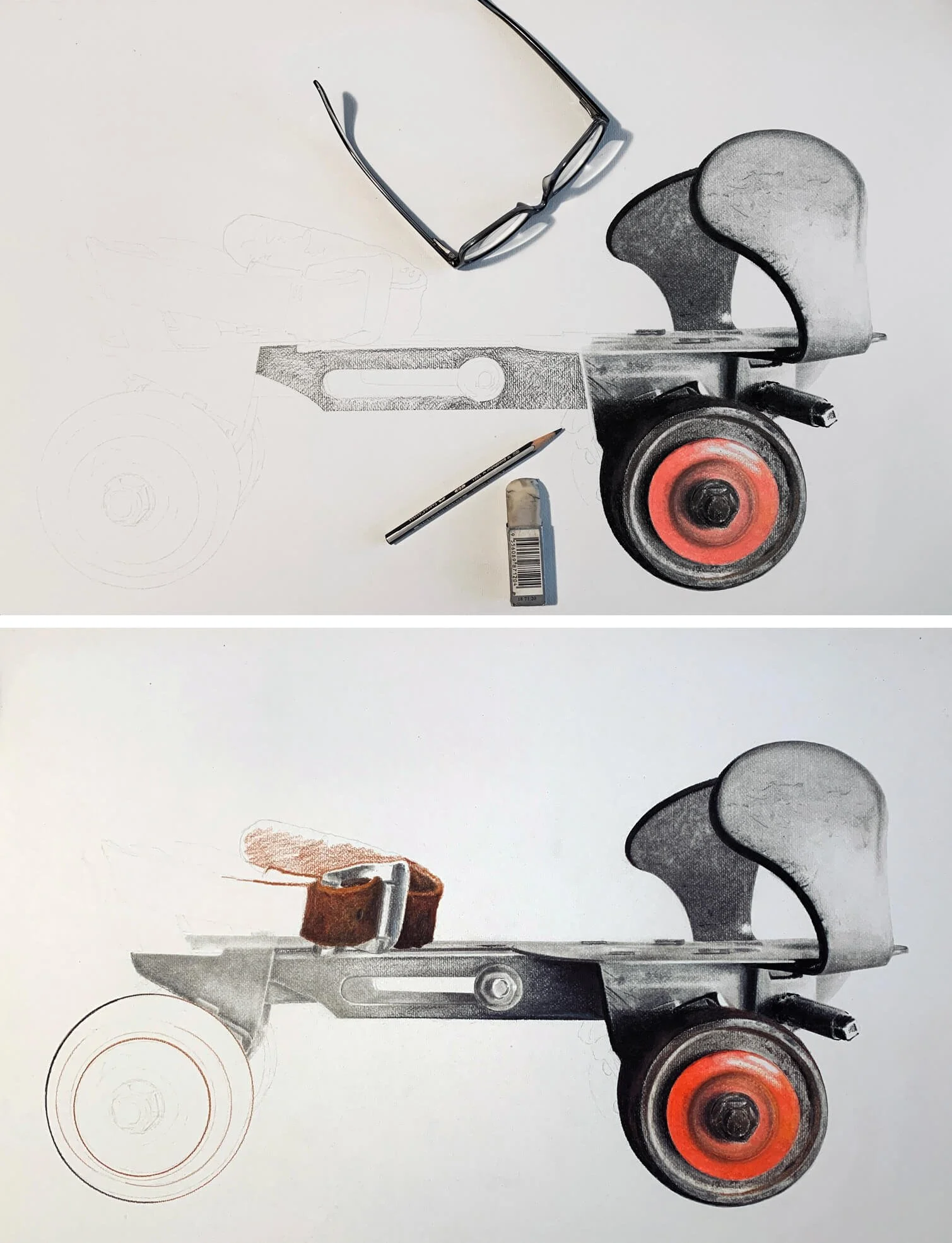 Image 3 of 5
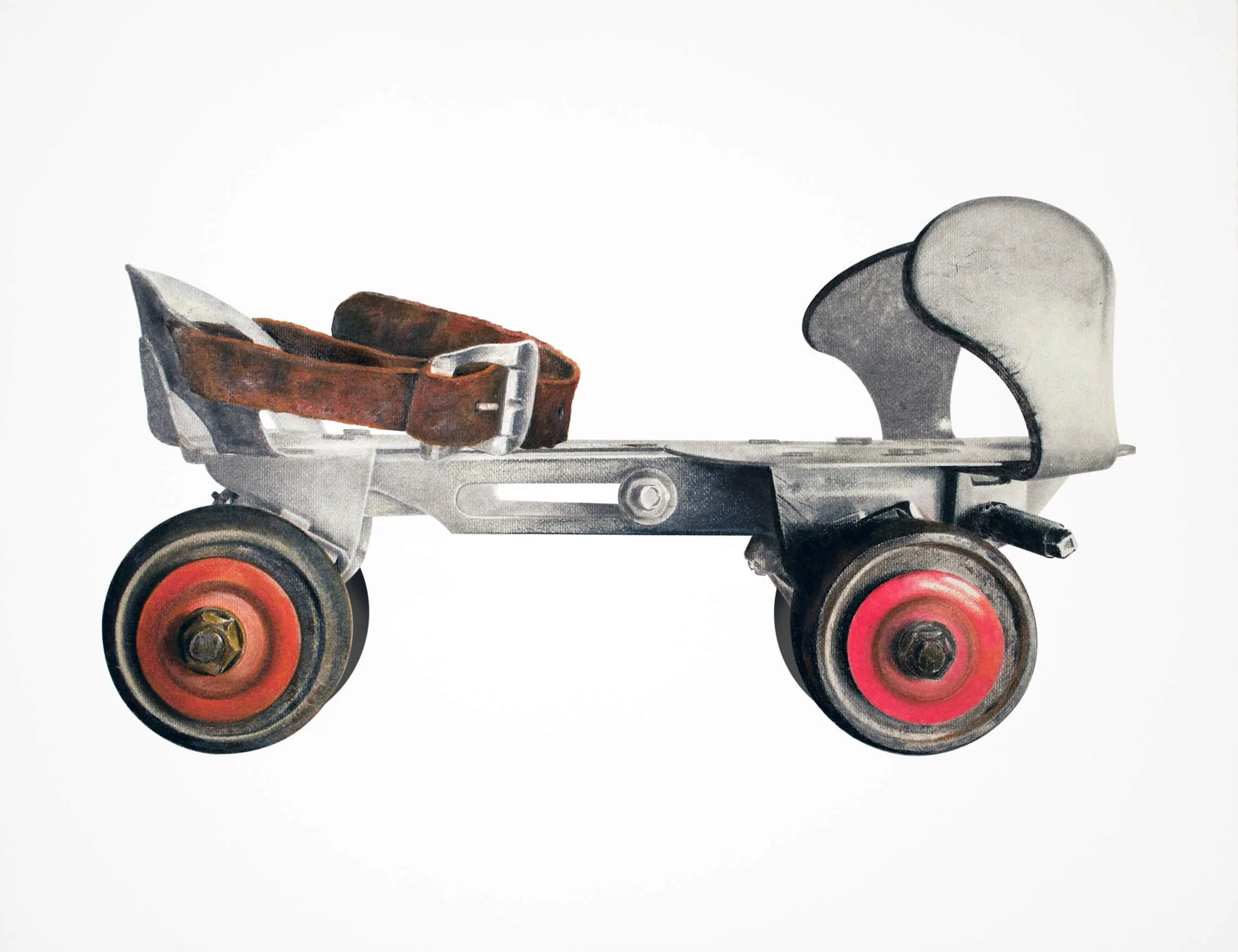 Image 4 of 5
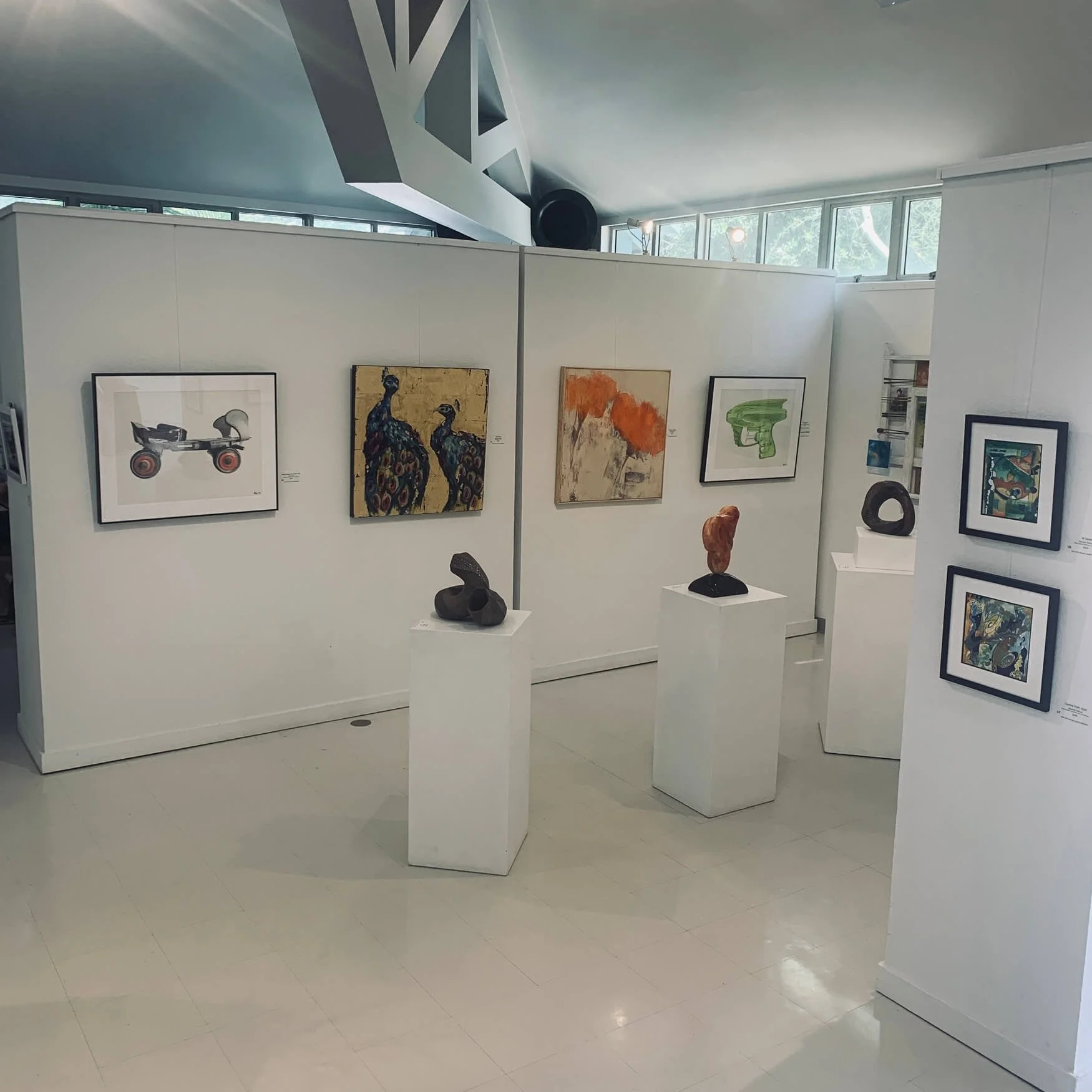 Image 5 of 5