Japanese tin robots were more than colorful mechanical toys. With their lightweight metal bodies, flashing lights, exposed gears, and imaginative movements, they reflected a new kind of design thinking—playful, efficient, and remarkably inventive.
By the early 1970s, many Americans still viewed products marked “Made in Japan” as inexpensive or inferior. Yet toys like the Metal House Piston Robot were already offering a glimpse of the creativity and engineering that would soon reshape industries around the world.
Today, this robot is more than a collectible. It is a portrait of childhood imagination and a reminder that sometimes the smallest objects offer the clearest glimpse of what is coming next.
That’s the essence of American Material Memory. Ordinary manufactured objects quietly preserve not only the lives we lived, but the future we once held in our hands.
From the Artist
I've always loved the optimistic design of Japanese tin robots.
Growing up in Michigan during the early 1970s, I watched Detroit build automobiles that were powerful, heavy, and covered in chrome. At the same time, Japan was quietly creating products that felt completely different—lighter, colorful, imaginative, and remarkably well engineered.
As a kid, I didn't understand the significance of that difference. I simply thought these robots were fun. Looking back now, I realize they represented a completely different way of thinking about design.
That's what I enjoy drawing.
Every reflective metal surface, transparent chest, flashing mechanism, and brightly colored detail reminds me that great design isn't always about making something bigger or more powerful. Sometimes it's about making something that captures a child's imagination.
Today, I don't see this robot as a collectible. I see it as a small piece of design history that quietly remembers what it felt like to believe tomorrow would be even more exciting than today.
Japanese tin robots were more than colorful mechanical toys. With their lightweight metal bodies, flashing lights, exposed gears, and imaginative movements, they reflected a new kind of design thinking—playful, efficient, and remarkably inventive.
By the early 1970s, many Americans still viewed products marked “Made in Japan” as inexpensive or inferior. Yet toys like the Metal House Piston Robot were already offering a glimpse of the creativity and engineering that would soon reshape industries around the world.
Today, this robot is more than a collectible. It is a portrait of childhood imagination and a reminder that sometimes the smallest objects offer the clearest glimpse of what is coming next.
That’s the essence of American Material Memory. Ordinary manufactured objects quietly preserve not only the lives we lived, but the future we once held in our hands.
From the Artist
I've always loved the optimistic design of Japanese tin robots.
Growing up in Michigan during the early 1970s, I watched Detroit build automobiles that were powerful, heavy, and covered in chrome. At the same time, Japan was quietly creating products that felt completely different—lighter, colorful, imaginative, and remarkably well engineered.
As a kid, I didn't understand the significance of that difference. I simply thought these robots were fun. Looking back now, I realize they represented a completely different way of thinking about design.
That's what I enjoy drawing.
Every reflective metal surface, transparent chest, flashing mechanism, and brightly colored detail reminds me that great design isn't always about making something bigger or more powerful. Sometimes it's about making something that captures a child's imagination.
Today, I don't see this robot as a collectible. I see it as a small piece of design history that quietly remembers what it felt like to believe tomorrow would be even more exciting than today.
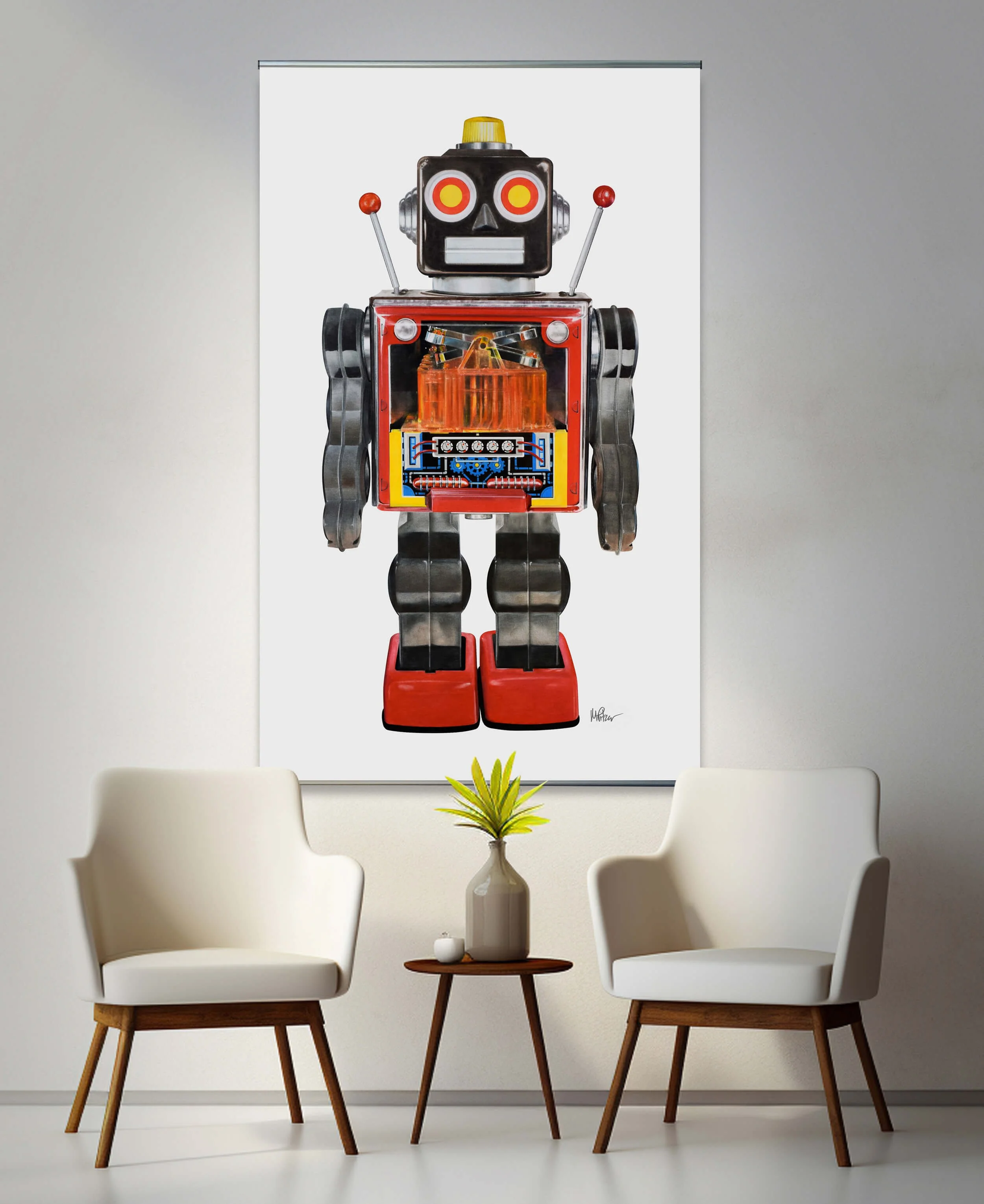 Image 1 of 4
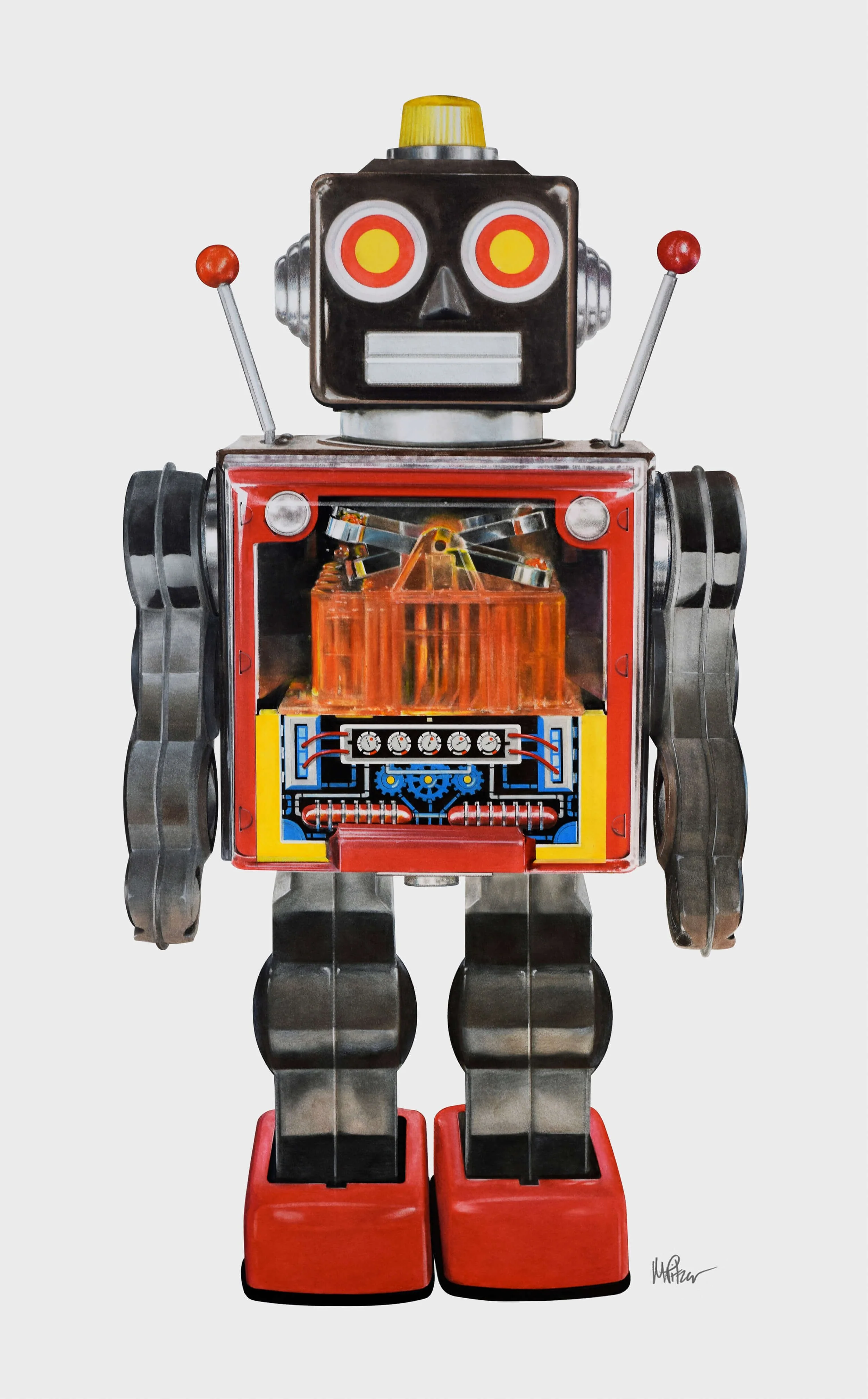 Image 2 of 4
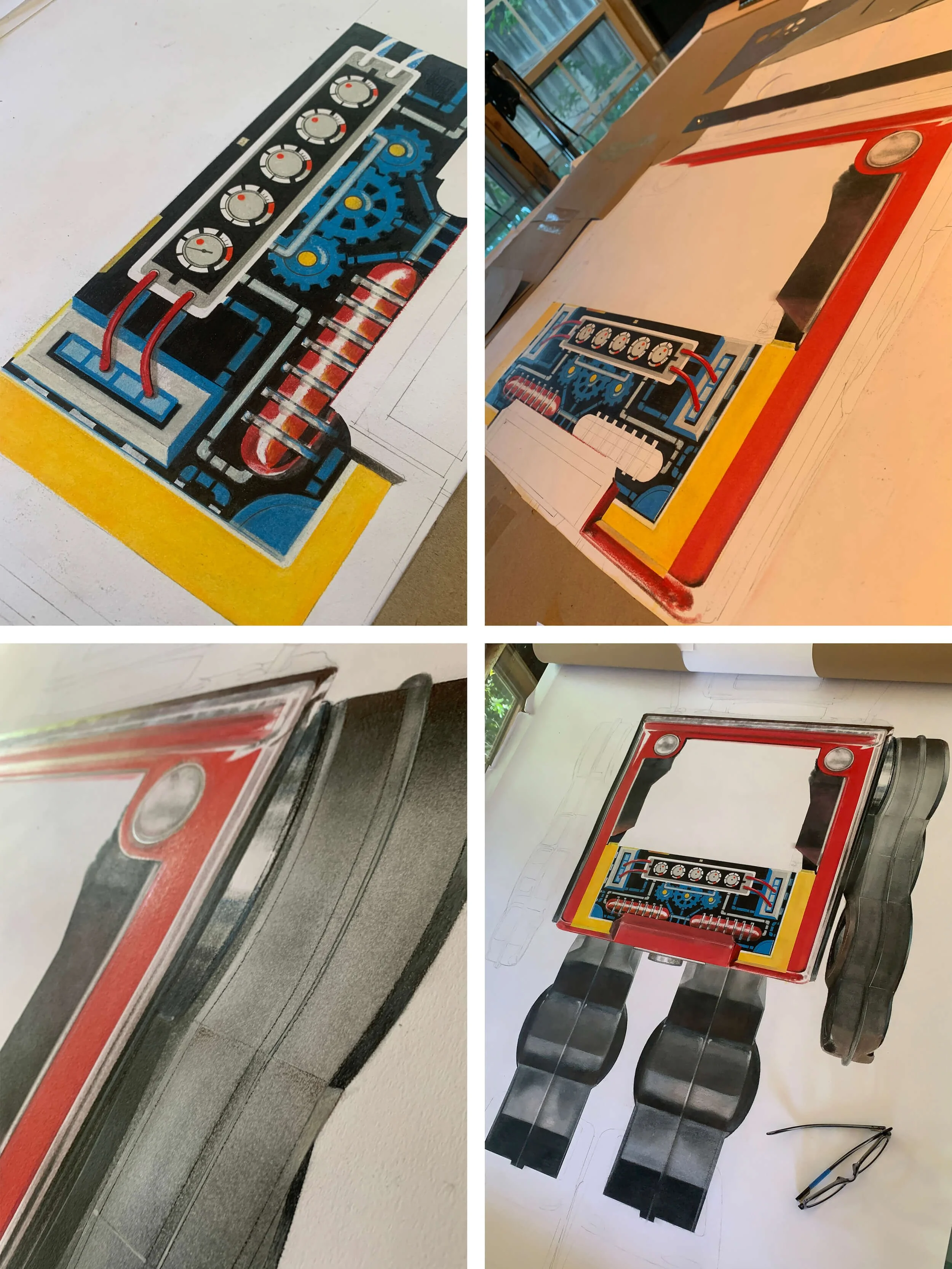 Image 3 of 4
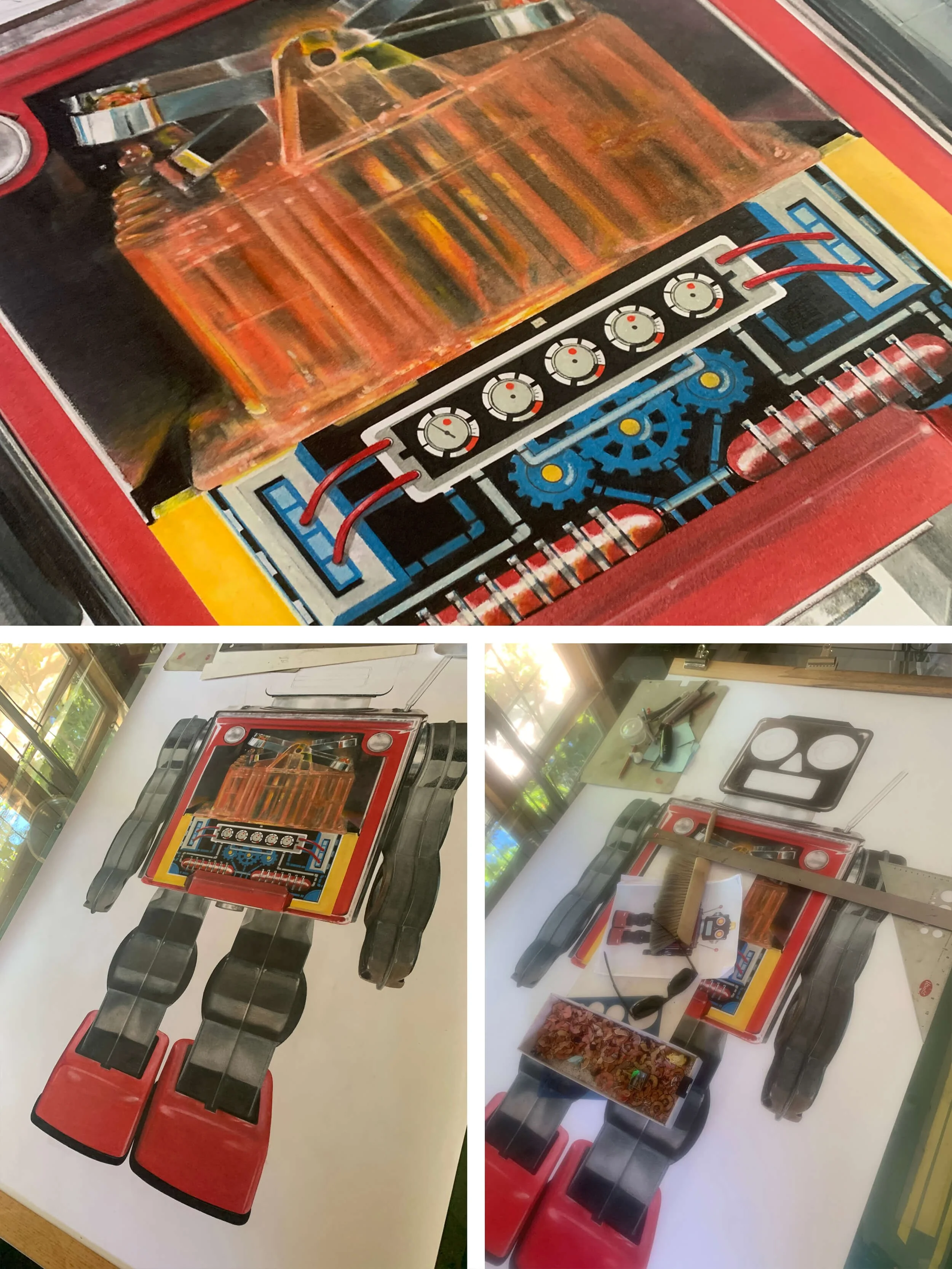 Image 4 of 4