Some childhood dreams never made it into the garage.
For countless American kids growing up during the 1960s and 70s, the minibike represented something larger than transportation. It was independence. It was the promise of riding farther than your bicycle could take you and experiencing a freedom that felt just a little beyond the reach of childhood.
Whether we owned one, borrowed one from a friend, or simply stared at one in the Sears Catalog, the memory often remained long after the machine disappeared.
American Material Memory reminds us that objects like a minibike aren’t remembered because of their horsepower or engineering. They're remembered because they quietly carried our dreams, our adventures, and the feeling that growing up was finally beginning.
From the Artist
When it came to asking for something like a minibike, my parents had a look that basically said it all: “Did we diaper you on the wrong end when you were born?” No translation needed; their looks meant“No.”
So I never owned one.
Funny thing is, I don't think that's why I drew it. I drew it because I can still remember wanting one so badly that I could already imagine where I'd ride it, whom I wouldn’t let ride it, and how cool I’d be for having one—even though it never happened.
Looking back, I realize this drawing isn't really about the minibike. It's about remembering what it felt like to be the kid who wanted one.
Mounted Artwork Description
This original artwork was created in graphite and Prismacolor colored pencil. Following completion, the drawing was carefully trimmed from its original sheet and professionally mounted on Canson XL Mixed Media Paper (98 lb / 160 g/m²), selected to match the original drawing paper. The mounted presentation features clean, precision-cut edges surrounding the original artwork. The graphite retains its characteristic range of soft greys, crisp detail, and natural metallic sheen, while the Prismacolor pencils provide rich, wax-based color and smooth tonal transitions. The artwork is securely adhered to the backing, lying perfectly flat with a clean white border that frames the original drawing without altering the original image.
Some childhood dreams never made it into the garage.
For countless American kids growing up during the 1960s and 70s, the minibike represented something larger than transportation. It was independence. It was the promise of riding farther than your bicycle could take you and experiencing a freedom that felt just a little beyond the reach of childhood.
Whether we owned one, borrowed one from a friend, or simply stared at one in the Sears Catalog, the memory often remained long after the machine disappeared.
American Material Memory reminds us that objects like a minibike aren’t remembered because of their horsepower or engineering. They're remembered because they quietly carried our dreams, our adventures, and the feeling that growing up was finally beginning.
From the Artist
When it came to asking for something like a minibike, my parents had a look that basically said it all: “Did we diaper you on the wrong end when you were born?” No translation needed; their looks meant“No.”
So I never owned one.
Funny thing is, I don't think that's why I drew it. I drew it because I can still remember wanting one so badly that I could already imagine where I'd ride it, whom I wouldn’t let ride it, and how cool I’d be for having one—even though it never happened.
Looking back, I realize this drawing isn't really about the minibike. It's about remembering what it felt like to be the kid who wanted one.
Mounted Artwork Description
This original artwork was created in graphite and Prismacolor colored pencil. Following completion, the drawing was carefully trimmed from its original sheet and professionally mounted on Canson XL Mixed Media Paper (98 lb / 160 g/m²), selected to match the original drawing paper. The mounted presentation features clean, precision-cut edges surrounding the original artwork. The graphite retains its characteristic range of soft greys, crisp detail, and natural metallic sheen, while the Prismacolor pencils provide rich, wax-based color and smooth tonal transitions. The artwork is securely adhered to the backing, lying perfectly flat with a clean white border that frames the original drawing without altering the original image.
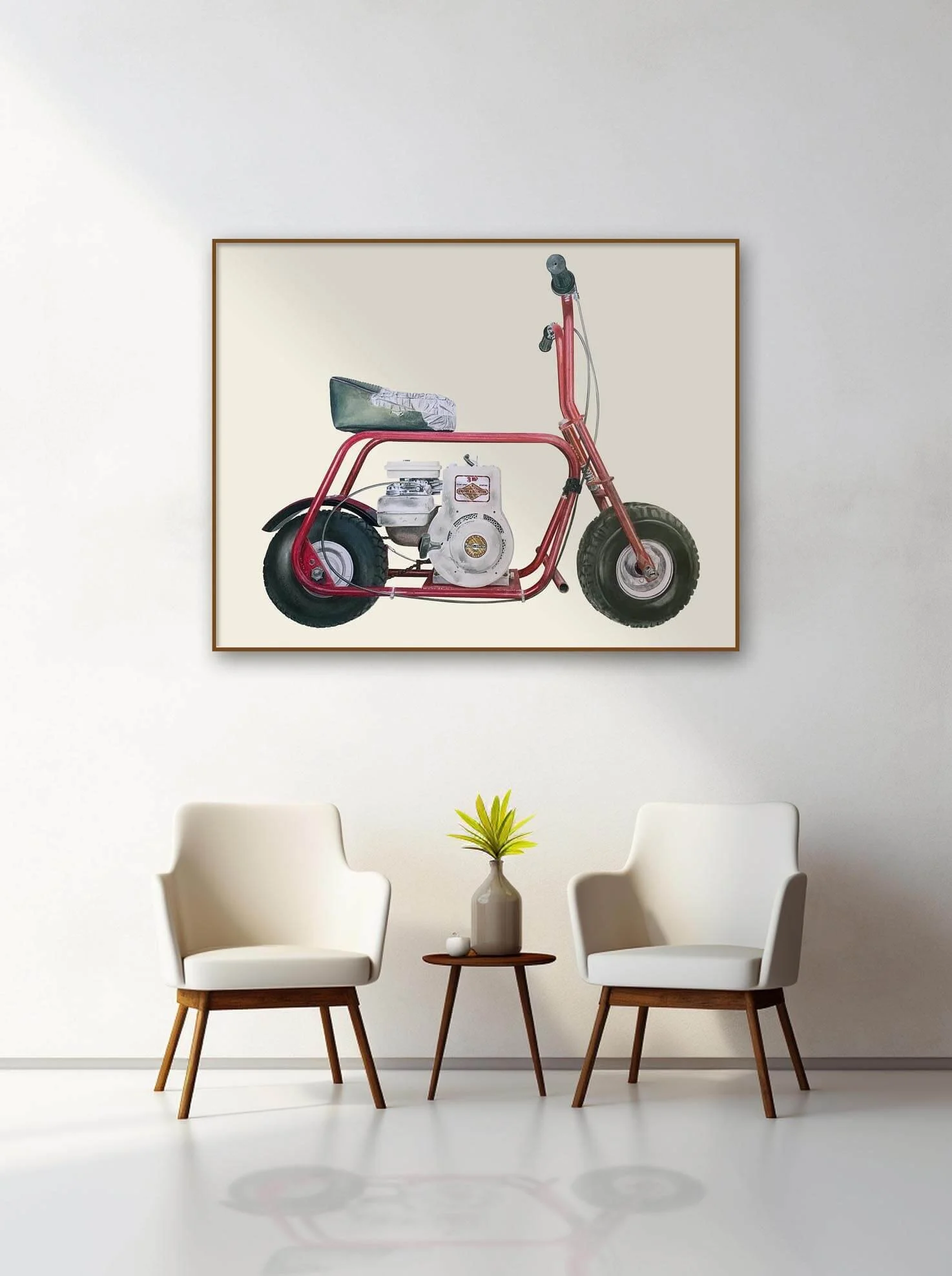 Image 1 of 4
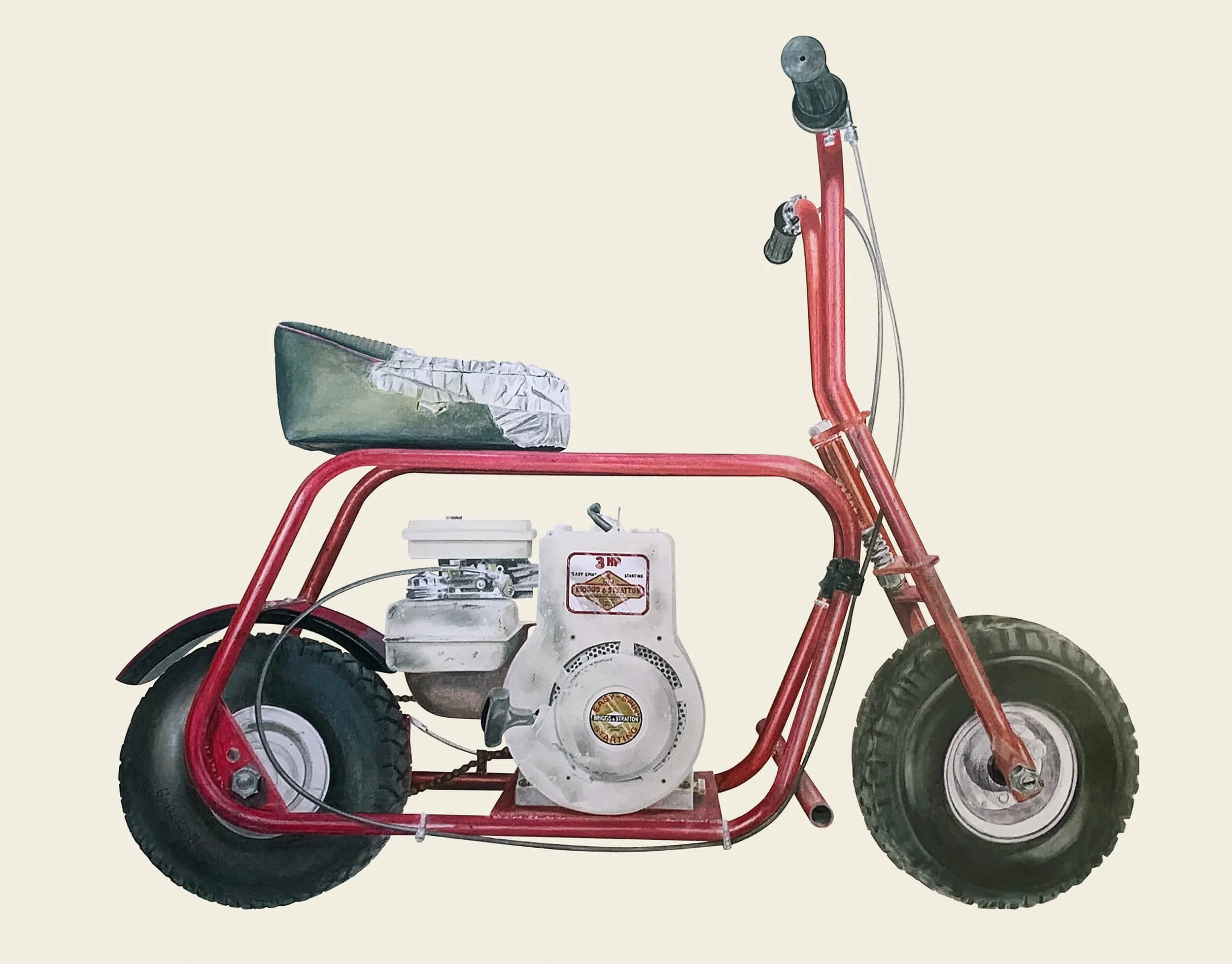 Image 2 of 4
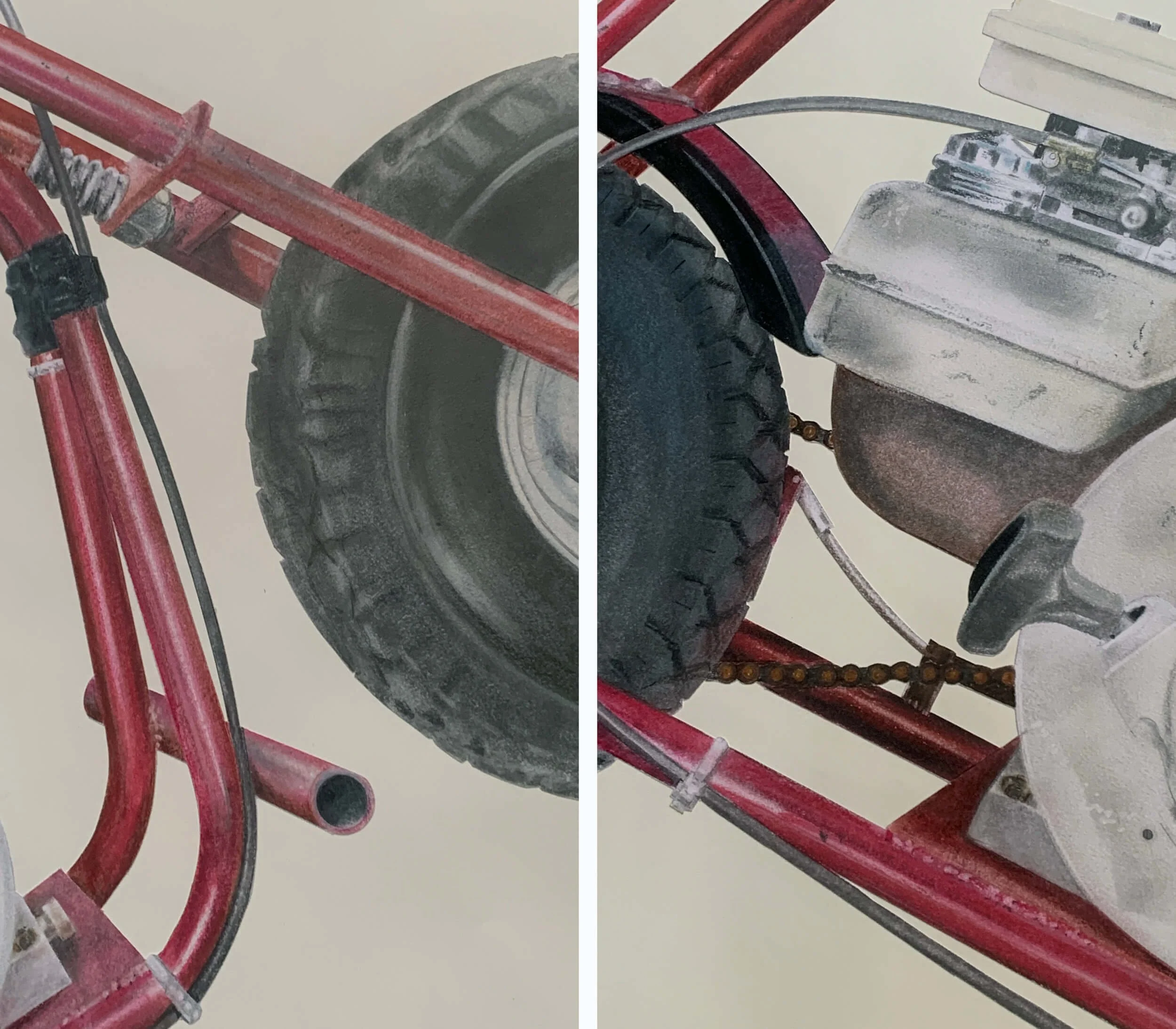 Image 3 of 4
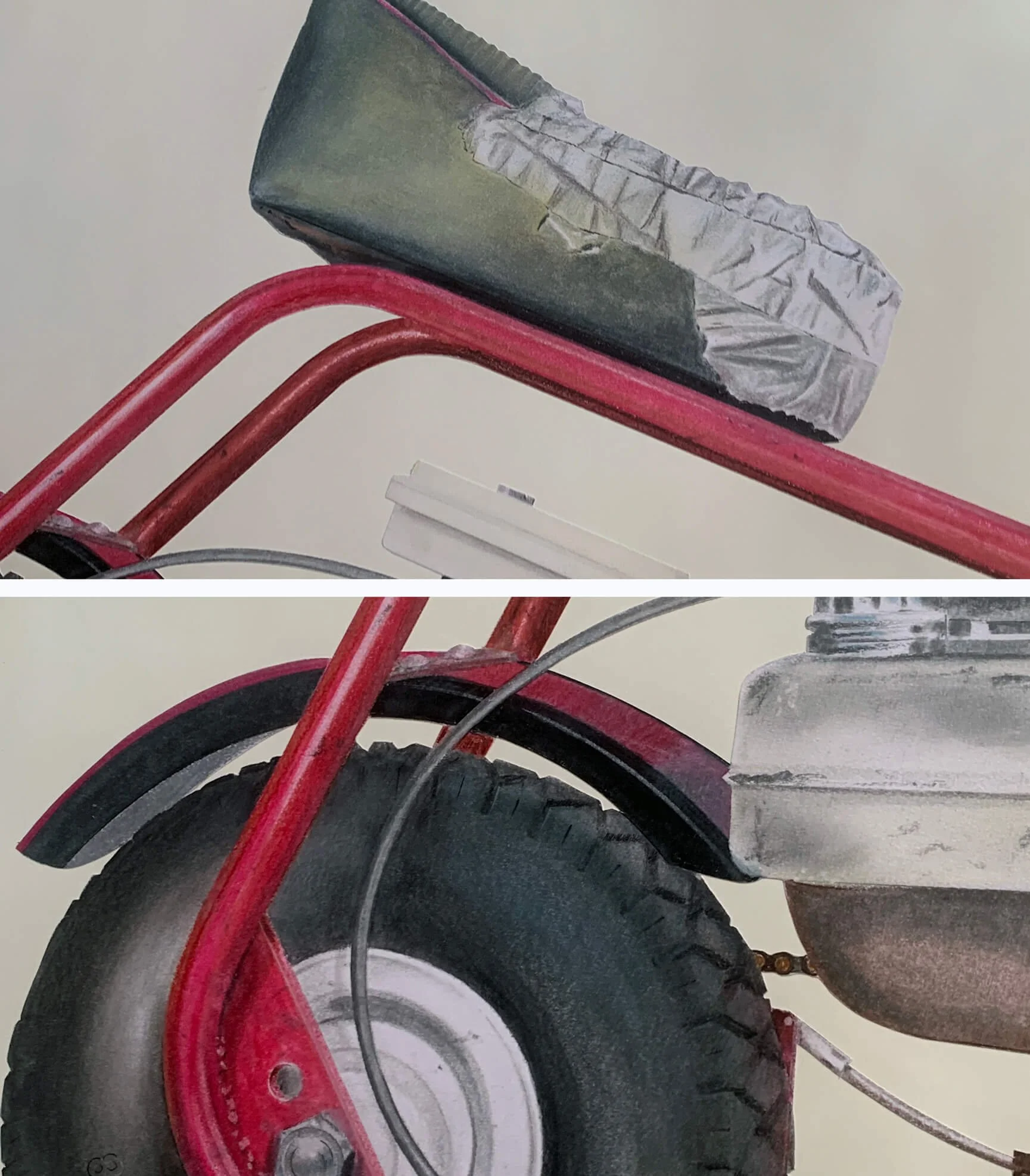 Image 4 of 4